75 years, one legendary weekend
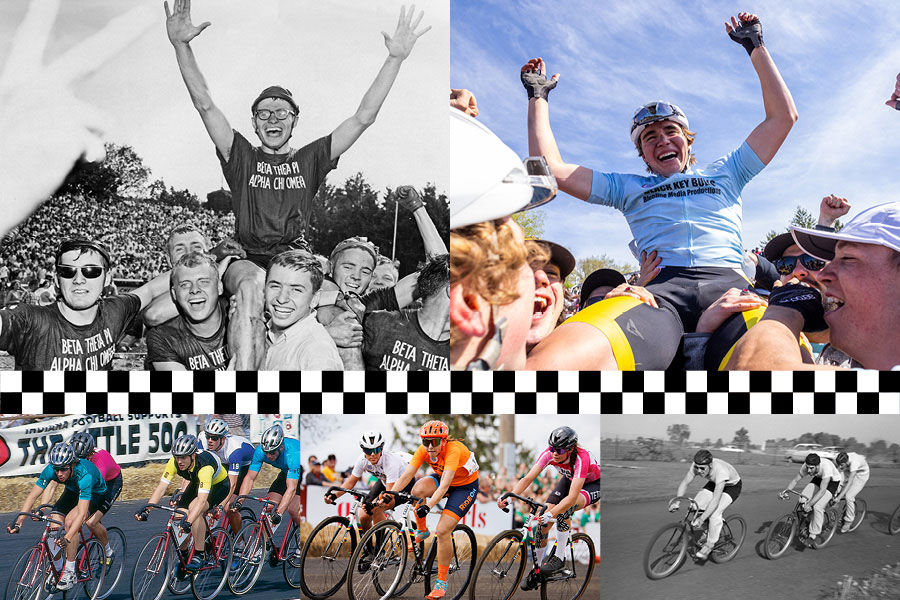
Little 500, the nation’s largest collegiate bike race, celebrated its 75th running in April. Take a lap through history and uncover the traditions and mission behind the world’s greatest college weekend.
Setting the pace
Recognizing the need to involve students and alumni in the philanthropic endeavors of the IU Foundation, Howard “Howdy” Wilcox, BA’42, who was executive director at the time, proposed the idea. “The Foundation would never be the organization it was intended to be unless the student body was involved,” said Wilcox. Thus, the IU Student Foundation was founded in 1950.
“I knew I had to challenge their imagination and their energies,” said Wilcox of that first group of IUSF members. Soon after, Wilcox witnessed an informal cycling event on campus that would inspire the premise of the Little 500.
“The idea took hold, the committee unanimously liked it, and the Little 500 was born,” said Wilcox.
He envisioned the race as an opportunity to not only raise awareness of the Foundation and its purpose, but also to fund scholarships for students who were working while enrolled at IU. That focus—“to help those who are helping themselves”—became the motto of the IUSF and the race in the early years.
“The following months [of planning] were hectic, but in the end that first Little 500 netted $6,000, with every cent going into scholarships, and years later, the formula is essentially the same,” recalled Wilcox at the 50th running.
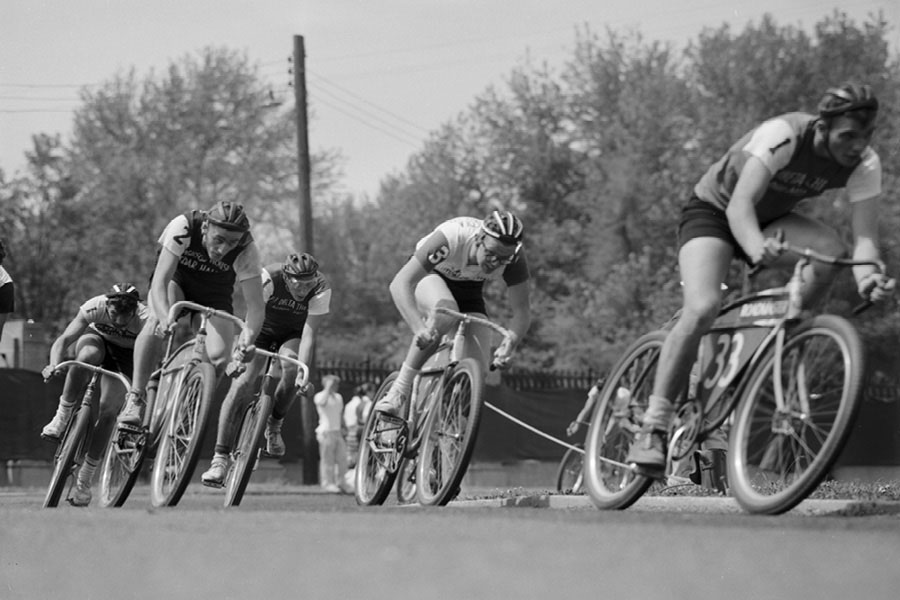
That first Little 500 took place May 12, 1951, on an overcast day in Bloomington at the old Memorial Stadium on 10th Street. Thirty-three teams of four men raced around the track on Schwinn bicycles as almost 7,000 people cheered them on. The South Hall Buccaneers team claimed victory of that inaugural race, finishing the 50-mile race with a time of two hours, 38 minutes—more than four minutes ahead of the runner-up team.
After race expenses were paid, the remaining profits from the first race provided 60 scholarships valued at $100 each—the equivalent of $1,250 now.
Wilcox departed the IU Foundation in 1952, and Bill Armstrong, BS’51, took the helm, serving as executive director until 1983. Armstrong was instrumental in the Little 500 as well as IU soccer. In 1981, Bill Armstrong Stadium, home to both programs, was named in his honor.
Hollywood comes to Bloomington
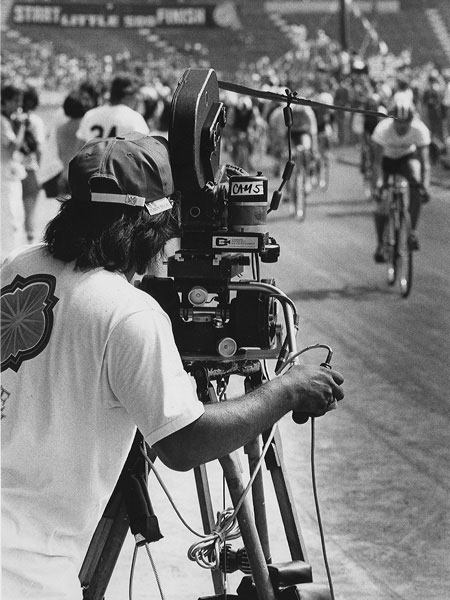
Little 500 was an established tradition among the IU community by the late 1970s, but the film Breaking Away took it to a new level. A classic underdog story, Breaking Away follows a ragtag foursome of Bloomington locals, known as “cutters,” who enter and win the race.
Filming began in the late summer of 1978, and the movie premiered in April 1979 at the IU Auditorium. It garnered national attention in April 1980 when it was awarded the Academy Award for Best Original Screenplay and was a nominee for Best Picture. It’s considered by many to be one of the best sports movies of all time.
Writer Steve Tesich, BA’65, based the movie’s main character, Dave Stohler, on real-life Little 500 rider David Blase, BA’62, MS’73. The two were Little 500 teammates in the early 1960s.
Blase was himself a character. An article in the IU Alumni Magazine from 2000 describes him as quiet and reclusive as an IU freshman. When he was asked to try out for his dorm’s Little 500 team, he accepted—then hid in a bathroom the day of the tryout. But he developed into the best young rider on campus.
Later, in 1962, he was dominant in victory, riding 138 of 200 laps for Phi Kappa Psi. By that time, he had also developed an Italian persona. “I wanted to copy those I admired,” he said. “The Italians were pre-eminent in the world of cycling. I’d go down Third Street singing operas. It was a form of escape.”
Expanding the roster
Since its inception, women had been excluded from the Little 500—the race was considered “too dangerous for women”—even though Title IX, passed in 1972, provided women with equal access and funding for intramural sports. Through the years, alternative options like a balance contest—participants cycled while balancing a hard-boiled egg on a spoon—and tricycle races were considered opportunities for women to participate in the festivities.
In 1976, Kathleen Cerajeski, BA’80, became the first woman to participate on a men’s team, serving as an alternate for the Cravens B dorm team. In the early 1980s, responding to calls from women on campus, Dean of Women’s Affairs Phyllis Klotman proposed a separate women’s race and began planning for it. But a women’s race was still some years away.
Meanwhile, Kappa Alpha Theta—a sorority on campus— attempted to qualify for the 1987 men’s race. They placed 34th in trials, just missing the roster of 33 teams. After that historic attempt, the Theta team, Klotman, and numerous female students banded together and worked with the Student Foundation to establish a women’s division of the Little 500 race.
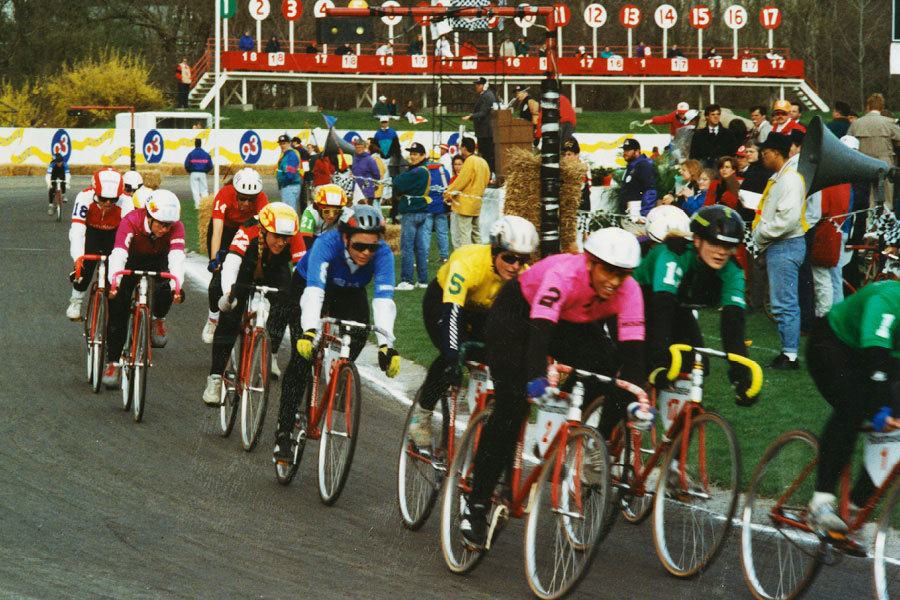
“Ladies, mount your Roadmaster bicycles!” the grand marshal announced April 22, 1988, and with that the women’s Little 500 race was a reality. In front of more than 11,000 fans, 30 all-female teams began the 100-lap race. An underdog dorm team, Willkie Sprint, captured first, and the Theta team was runner-up. Cerajeski, who was an alternate in the 1976 men’s race, coached team Notorious to a top-five finish.
Klotman wrote a letter in May 1988 to the riders in that first women’s race, thanking them for their enthusiasm and hard work. In closing, she wrote, “Good luck to you in the future and keep on cycling!”
The tradition continues
Seventy-five years later, the philanthropic mission behind the Little 500 race remains the same: support students.
“Little 500 started as a way to raise scholarship money for IU students, and philanthropy remains at the heart of everything we do,” says Peter Schulz, BS’23, Little 500 race director.
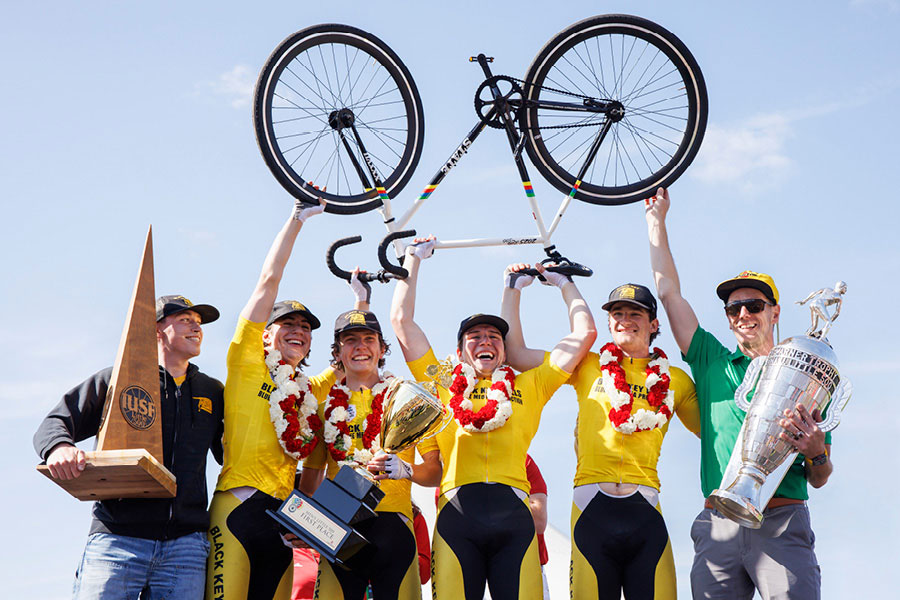
Today, that support manifests through a peer-to-peer campaign called “Students Helping Students,” which this year focuses on supporting students’ essential needs like food, housing, and healthcare.
As the cost of living continues to increase, providing accessible funding to students will ensure more of them can thrive, says Aimie DeLeon, BS’16, IUSF assistant director of lifetime engagement. “The Students Helping Students campaign demonstrates that IU students can make a difference now that will have a life-changing impact on students for years to come.”
The race itself also remains the same—students on bikes competing on a cinder track—but it has become so much more than one day in April.
Race weekend serves as a rite of spring on the Bloomington campus as well as the end of months of training for the riders. The sold-out race is often in the national spotlight, with appearances from celebrities such as Bob Hope; John Mellencamp, DM Hon’00; Barack Obama during his first presidential campaign; and Indiana Football’s Curt Cignetti.
“The tradition and history of this event are part of the fabric of the university and the town of Bloomington,” Cignetti said at the 2025 men’s race. “It’s what makes Indiana University so special.”
Considering its rise from humble inspiration to an iconic tradition, you can’t help but think that Howdy would be proud of the world’s greatest college weekend.
Lewis legacy
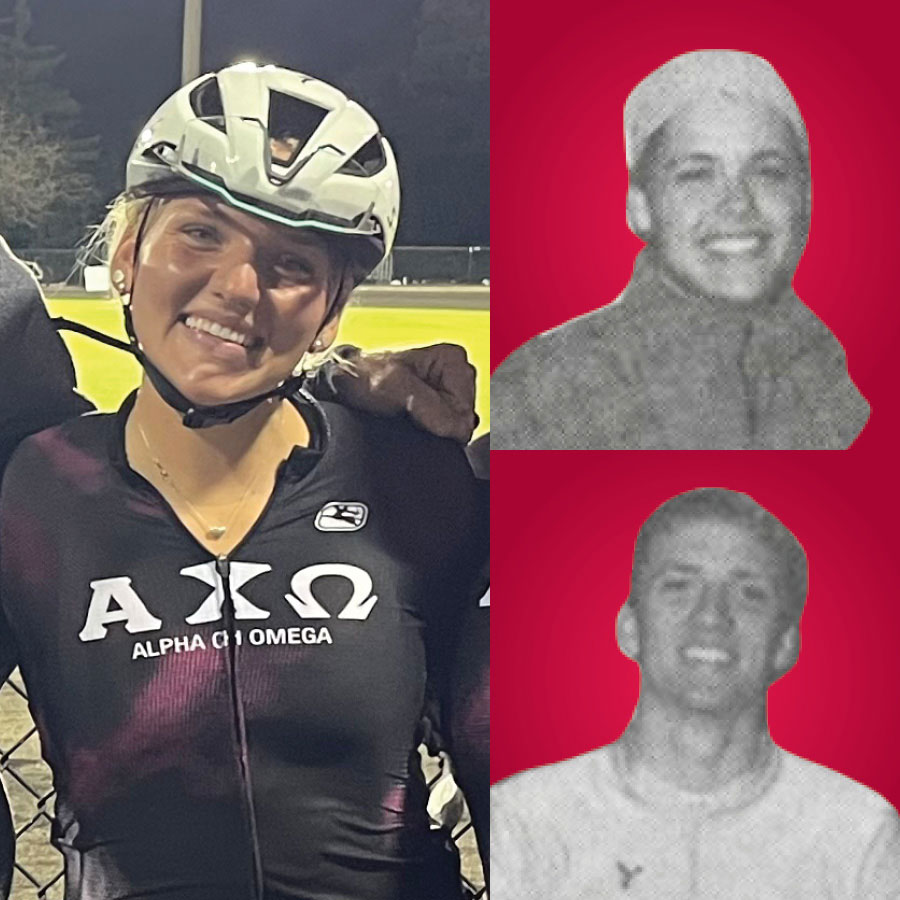
Sophomore Libby Lewis’s parents both were on Little 500 teams in the 1990s—her father, Cory Lewis, BS’96, rode for Phi Gamma Delta, winning in 1995; her mother, Erin (Reilly) Lewis, BS’96, rode in qualifications for Kappa Alpha Theta, which also won in 1995.
So you might think that from a very early age Libby Lewis had dreams of riding on the famed Armstrong Stadium cinder track. Nope. Lewis, who grew up in Indianapolis, says she would be part of casual family rides, but that was enough. “I hated biking.”
Fast forward to the summer before she headed to IU. She finally agreed to join her dad on one of his training rides with friends.
At first, it wasn’t really clicking for Lewis, but the three-sport high school athlete was at least able to keep pace.
“I was like, ‘OK, if I can hang with them, maybe it’s something I would be interested in,’” she says. “I think [that’s what] flipped the switch.”
Turns out she was something of a natural. By the end of her freshman year, Lewis was competing in the 2025 Little 500 with the Alpha Chi Omega team. She won the individual time trials—the first time ever for freshman—and the team finished second.
Her dad was there, of course, and they shared a hug after the race.
“It was just cool [and] special that he was so proud of me,” Lewis says.
Written By
Lacy Nowling Whitaker
Lacy, a Bloomington native, earned two degrees from IU Bloomington (BA’08, MA’14) and is the Director of Content Development with the IU Foundation. She also serves as the managing editor of the IU Alumni Magazine.