A Patterned Past
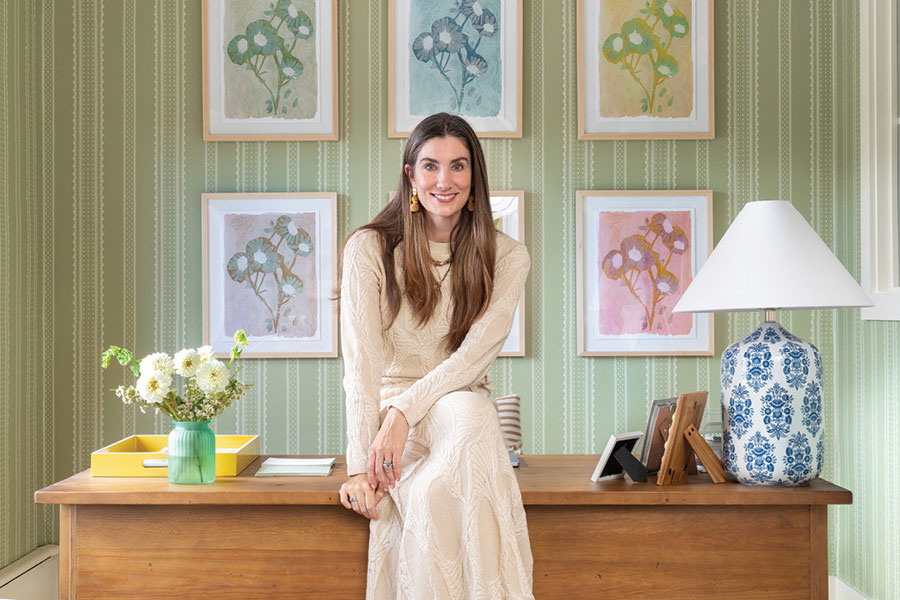
Elizabeth Rees fell in love with wallpaper long before she ever thought about building a business around it. At her grandmother’s home in Illinois, every room told a story in pattern—and some of Rees’s earliest memories are of drifting off beneath blue florals and tracing the designs on the walls with her fingertips.
Back then, wallpaper was just something she was captivated by. Years later, it became her life’s work. In 2013, Rees, BAJ’06, and her brother, Mike, launched the wallpaper company Chasing Paper. More than a decade later, she’s still chasing that same sense of wonder, now captured in her book Wall Flowers: A Love Letter to Wallpaper, which explores both the history of the centuries-old industry and her contribution to it.
The idea for Chasing Paper was born while Rees, a Wisconsin native, was living in New York City. She wanted to use wallpaper in her apartment, but as a renter, she also knew her deposit was at stake. At the time, there were some peel-and-stick wallpaper options on the market, but the quality and designs weren’t anywhere near what she was looking for.
She saw a hole in the market and launched Chasing Paper with a single product: two-by-four-foot peel-and-stick panels. They’ve since expanded their products to include traditional wallpaper, as well as faux grasscloth and matte vinyl.
In this Q&A, we talk with Rees about the skepticism around peel-and-stick wallpaper, which wallpaper prints she chose for her Milwaukee home, and much more.
How did you come up with the name Chasing Paper?
Elizabeth Rees: Every morning, I would take the subway to work in New York City. I had a little notebook, and I would write down name ideas for the company. And every morning, I would look at yesterday's ideas, and I would cross out ones that I didn't like. Chasing Paper stayed on that list for weeks and weeks. And then somebody told me that “chasing paper” has an urban connotation of hustling, making money. In the early days, I was like, “Okay, well, this is going to be a hustle for sure.” I also liked that it wasn't so specific to wallpaper. [The name] just stuck.
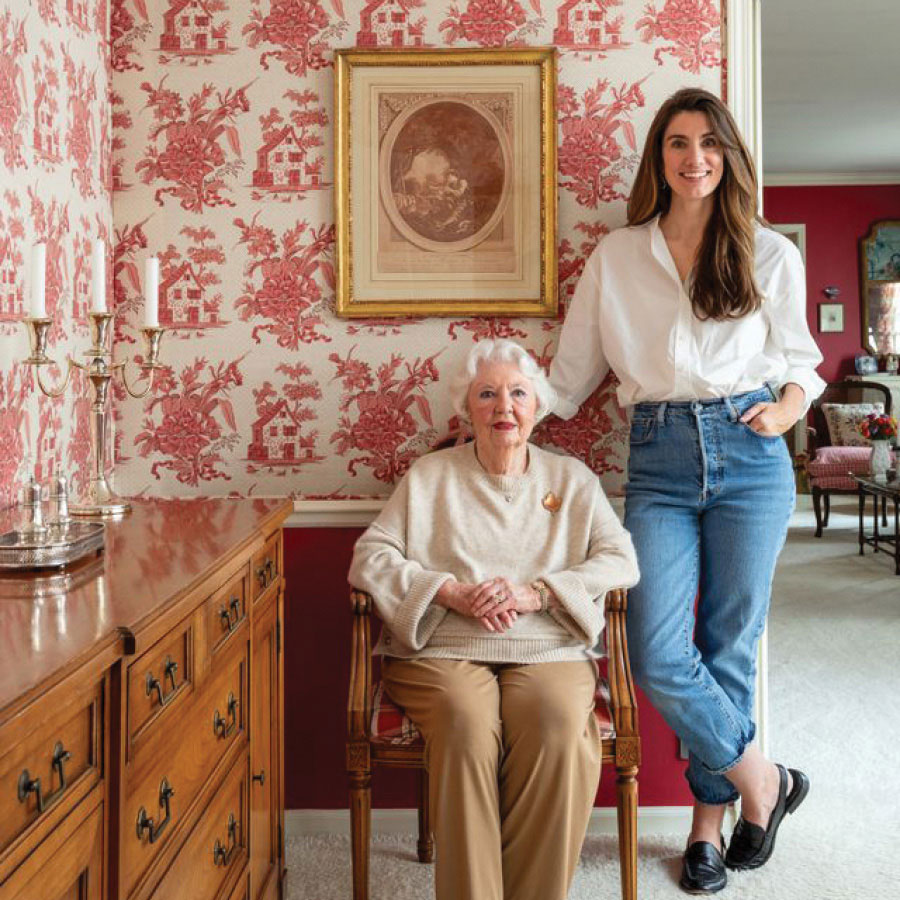
Kent Street, in the shade “multi,” hangs in the breakfast nook at Rees's Milwaukee home. Pictured with her grandmother, Margaret
You grew up in homes covered in wallpaper. Why do you think wallpaper is so special?
ER: Wallpaper really triggers something in our memories. It is so impactful, and it carries something that's so much bigger than just interior design. It's part of the fabric of the world that you're creating or growing up in.
I think the thing that keeps me going [as a small business owner] is when I get an email from someone, and they're using our paper in their nursery or in their first home. I cannot believe that our paper will be part of the backdrop of those memories. I really don't take that lightly. It's such an honor for people to bring something that my team and I have created into their homes.
When some people hear peel and stick, they think cheap, tacky, and poor quality. What makes Chasing Paper’s peel-and-stick wallpaper different?
ER: Our peel-and-stick wallpaper has the rich texture that you find on most traditional wallpapers—but it's actually a peel-and-stick fabric. We wanted it to be removable but not look that way. Chasing Paper products will stay up until you decide to remove them.
When talking about paper, the sustainability topic inevitably comes up. How does Chasing Paper tackle sustainability?
ER: Our peel-and-stick wallpaper is made from high-quality, self-adhesive poly-woven fabric and can be reused if taken care of properly. Additionally, we have always sold our wallpaper in panels versus rolls, and our wallpaper is printed to order. These practices reduce waste.
In that same vein, people have become very conscious about the toxins they bring into their homes. Can you tell me about the materials Chasing Paper uses?
ER: All of our wallpaper is free from VOC (volatile organic compounds), PVC (PolyVinyl Chloride), and phthalates, and we print with latex inks, which are water-based and non-toxic. We like to say that our paper is safe for kids and safe from kids as it’s non-toxic and wipeable.
What are some of your favorite non-traditional ways to use wallpaper?
ER: Ceilings are making a big comeback. Wallpapering a ceiling is a way to have a high impact without a large investment. It can make a room feel much taller or much larger than it is.
Our customers use peel-and-stick for desks, built-ins, and dresser drawers. We've also had customers love a pattern, but they’re not at a place where they can afford a room of wallpaper, so they frame it.
The sky is honestly the limit. It’s been so fun to see the paper being used in so many fantastically creative ways, and people really making it their own. I mean, that's our greatest hope and wish for our customers.
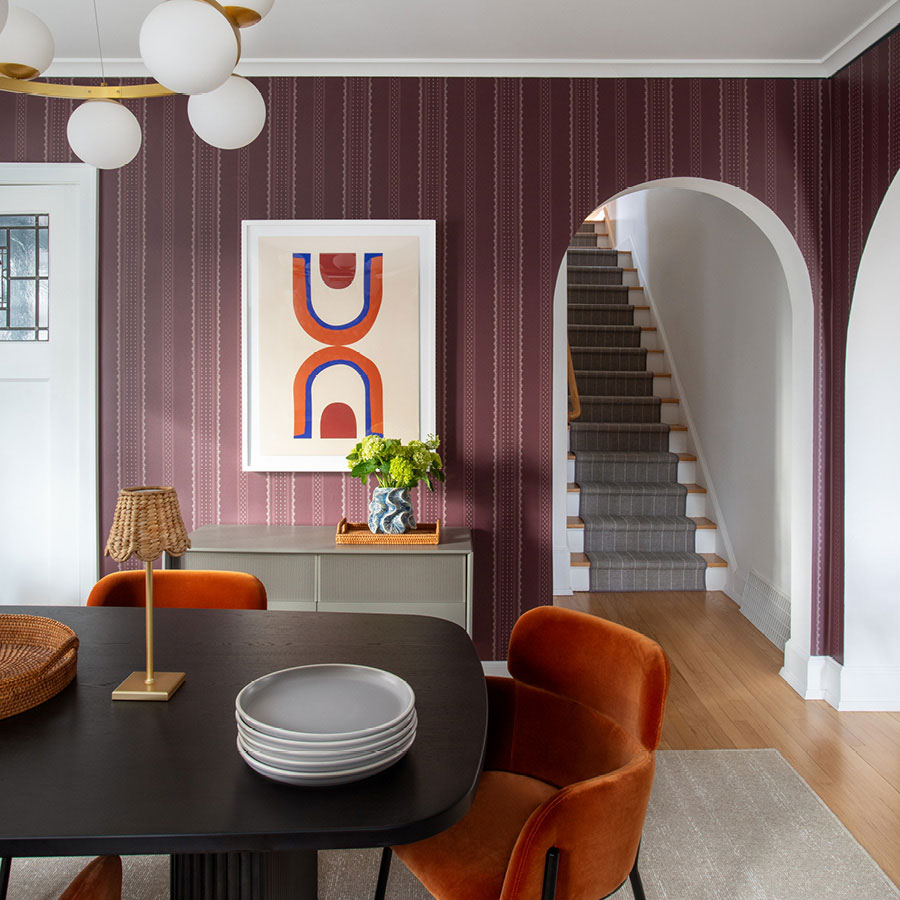
Rees used Heritage Stripe, inspired by her grandmother Lalla’s love of doilies, in her dining room.
Chasing Paper has the Heritage Collection, a series of evergreen prints that reflect your family’s heritage and legacy, but most collections are collaborations with outside artists. How many collections do you put out a year, and how are you finding new collaborators?
ER: We put out four to six collaborations a year, and every single one is so different from the last. We try to find collaborators who really have a unique point of view, have something to say, and have a story that we haven't heard a million times before.
Instagram can be such a powerful tool in creating relationships. So many of our collaborators have been people I've become internet friends with. We also get hundreds of submissions from people wanting to work with the brand. I get to look through lots of portfolios from fine artists to photographers, to interior designers, and graphic designers. It’s a great part of my job.
What do you think makes a great wallpaper print?
ER: I always say it's a great wallpaper if it’s a conversation starter. That's really what I was seeing when I lived in New York City. The places that I loved the most had funky, weird, interesting, sexy, cool wallpapers that really evoked something.
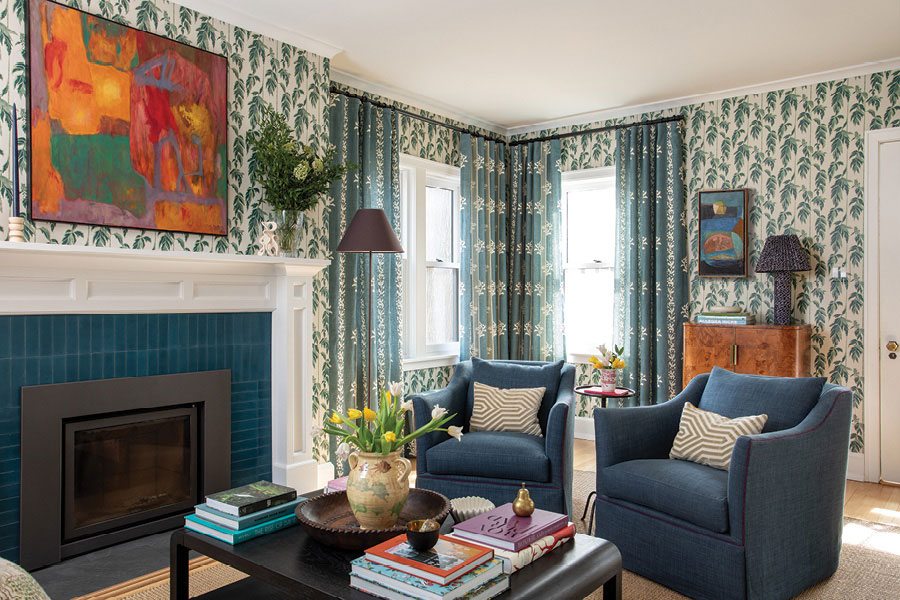
“I left [my living room] stark white for years—and it’s the room you walk into when you first enter my house. But I wanted it to include something that came out of my own brain,” Rees writes in her book. “After 10 years of Chasing Paper, I felt strongly about creating a print myself, and [Legacy Leaves] is the result. This is my personality in room form.”
What are some of Chasing Paper’s bestselling prints?
ER: Jenni Yolo's Cosmo Block Print and Tulip Ticking Stripe. Max Humphrey's Big Gingham. David Quarles's Ruth's Garden. Jen Peters's Puppy Pile. And from Chasing Paper's Heritage Collection, the Heritage Floral.
Which wallpaper prints are on display in your house?
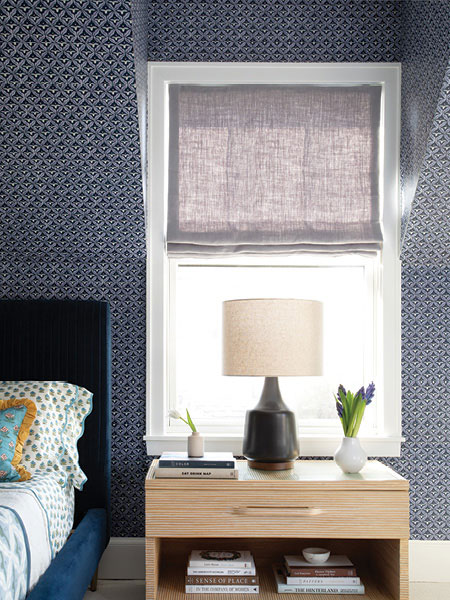
ER: I have Kent Street, which is named after the street I grew up on, in our breakfast nook, and Legacy Leaves in our living room. I have Samara in our primary bedroom and Ladder in our primary bathroom.
My daughter Uma’s room has a rainbow-colored wallpaper called Umi Stripe. In my daughter Marlow's room, I have Heritage Floral, and I used Woodland in their playroom. That’s just to name a few.
You described Wall Flowers: A Love Letter to Wallpaper as a coffee table book. What can readers expect in terms of content?
ER: It’s a little bit of the story of Chasing Paper and a little bit about me. In the second half of the book, I interview eight interior designers and talk to them about the power and the transformative nature of wallpaper and what draws them to it. There’s a lot of great inspiration in it, and it’s really pretty too.
Written By
Samantha Stutsman
Samantha Stutsman, BAJ’14, is a Bloomington, Ind., native and freelance writer. She has written for publications including PEOPLE, Indianapolis Monthly, and the IU Alumni Magazine.